Why this isn't a normal ticket
There's no single 'Great Wall'
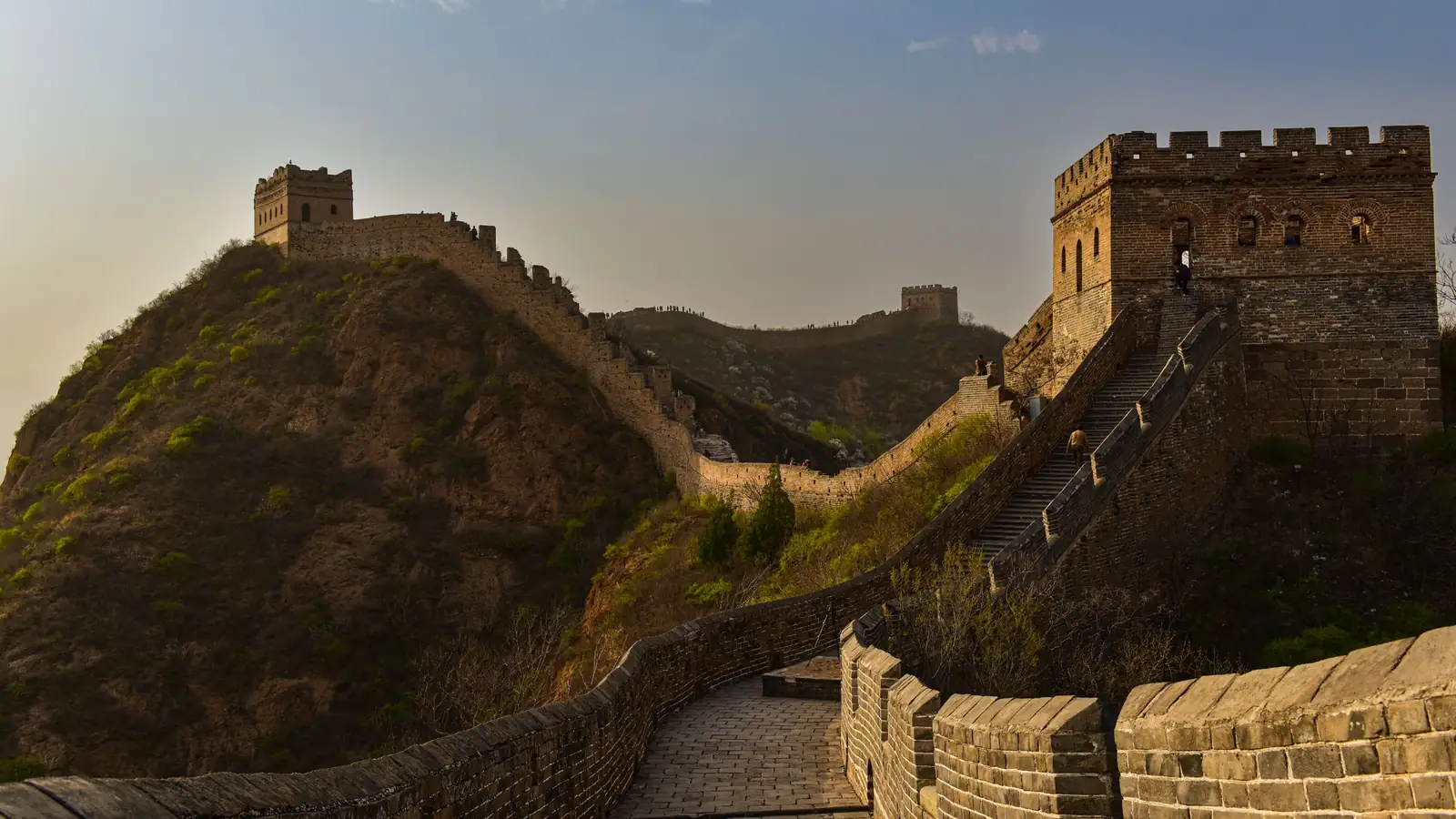
First-time visitors often picture one wall and one entrance, but the Great Wall near Beijing is several distinct sections — Mutianyu, Badaling, Jinshanling, Jiankou and more — each with its own character, crowds, access and facilities. The most important decision you'll make isn't when to buy a ticket but which section to go to, because it shapes the entire day.
Mutianyu is the sweet spot for most
Among the accessible sections, Mutianyu is the one most first-time visitors end up happiest with. It's extensively restored and safe to walk, strung along beautiful forested ridges, noticeably less crowded than the famous Badaling, and served by a cable car up and a fun toboggan ride down. It balances scenery, comfort and manageable effort better than the alternatives — which is why it's the default recommendation.
Getting there is part of the plan
Central Beijing is one and a half to two hours from Mutianyu, so transport isn't an afterthought — it shapes the whole day. Options range from organised day tours with transfers and a guide, to private cars, to public transport for the more independent. Factoring in travel time, the cable car and the section itself is what turns the Great Wall from a logistical puzzle into a smooth day out.
Which section of the Great Wall to visit
The Great Wall stretches for thousands of kilometres, and near Beijing you choose between a handful of very different sections. Here's how the main ones compare.
| Section | Character | Best for |
|---|---|---|
| Mutianyu | Restored, forested, cable car + toboggan | Most first-time visitors |
| Badaling | Closest, most famous, most crowded | The classic name, minimal travel |
| Jinshanling | Partly restored, dramatic, quieter | Hikers wanting fewer crowds |
| Jiankou | Wild, unrestored, steep | Experienced hikers and photographers |
Sections, access & trip-planning guides
The decision that shapes the day
Which section of the Great Wall should you visit?
Mutianyu, Badaling, Jinshanling or Jiankou — how to choose the right one.
Read the guide →The case for Mutianyu
Why Mutianyu is the best section for most visitors
Restored ramparts, forested views, fewer crowds and a toboggan down.
Read the guide →Logistics
Getting to the Great Wall from Beijing
Tour, private car or public transport — the practical ways to reach the Wall.
Read the guide →When to go
The best time to visit the Great Wall
Mild shoulder seasons and quiet hours beat the holiday crush.
Read the guide →Getting up and along
Mutianyu: cable car, toboggan and how much walking
How you get onto the wall, back down, and what the walking is really like.
Read the guide →Context and practicalities
Great Wall history and what to know before you go
A little background, and the practical basics for a smooth visit.
Read the guide →Questions people actually ask
Which section of the Great Wall is best to visit?
For most first-time visitors, Mutianyu is the best all-round choice: it's beautifully restored and safe to walk, set on scenic forested ridges, much less crowded than Badaling, and served by a cable car and a toboggan run. Badaling is the closest and most famous but by far the busiest; Jinshanling and Jiankou are quieter and more dramatic but better suited to keen hikers.
Why choose Mutianyu over Badaling?
Both are restored and accessible, but Mutianyu is generally quieter, greener and more relaxed, with a longer stretch of restored wall through forested hills, a cable car up and a toboggan down. Badaling is closer to Beijing and the most famous section, which also makes it the most crowded, especially at weekends and holidays. Many visitors find Mutianyu the more enjoyable and photogenic day.
How do you get to the Great Wall from Beijing?
None of the Wall's popular sections sit inside Beijing — reaching Mutianyu takes roughly ninety minutes to two hours on the road. An organised day tour is the simplest option, with transfers and usually a guide included; a private car or taxi gives more flexibility; public buses work for travellers happy to plan their own route. Given the drive time and connections involved, most people let a tour handle the transfers.
Is there a cable car at the Great Wall?
At Mutianyu, yes — there's a cable car (and a chairlift) to carry you up to the wall, saving a steep climb, and a fun toboggan run as one of the ways back down. These are ticketed separately from wall entry. The cable car makes Mutianyu accessible to a wide range of fitness levels, which is a big part of why it suits first-time visitors so well.
Which season is best for a Great Wall visit?
Spring (April–May) and autumn (September–October) are ideal, with mild weather and, in autumn, beautiful colour on the surrounding hills. Summer is green but hot and busy; winter is cold and quiet but can be strikingly beautiful with snow. Whenever you go, avoid the Chinese public-holiday periods if you can, as the Wall — especially Badaling — becomes extremely crowded then.
How much walking is involved at the Great Wall?
That depends on the section and how far you go. At Mutianyu, the cable car removes the initial climb, but the wall itself undulates with plenty of steps and slopes, so expect real walking once you're up there. You can do as much or as little as you like — walking a stretch between watchtowers and turning back — which makes it flexible for different fitness levels.
- Many options cancel free Many of the Mutianyu ticket and cable-car packages on Klook can be cancelled free, while others carry conditions. Each package shows its terms before you pay
- Secure checkout Your card details go straight to Klook, not to us
- No markup from us The price on the Wall's Klook listing is what you pay — we add nothing on top
- Independent guide We research the options and link to current listings; we don't sell the tickets